

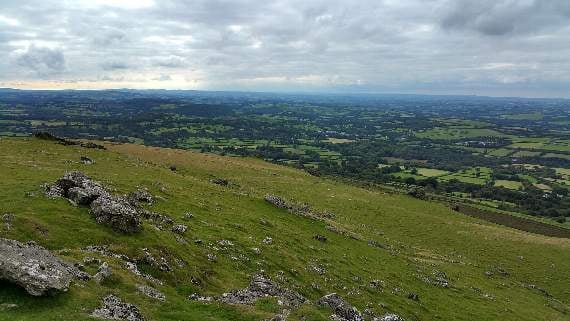
CAMPAIGNERS are calling on the Government to demonstrate their commitment to protecting England’s national parks after a report published by Campaign for National Parks, Campaign to Protect Rural England (CPRE) and the National Trust claims short-term economic priorities are overriding long-established protections and allowing inappropriate development.
The new report is based on research commissioned by the three organisations and conducted by Sheffield Hallam University. The research looked at the national policy to restrict ‘major development’ in National Parks, which has protected these iconic areas since they were created in the 1940s.
The research found that interpretations of ‘major development’ vary between the National Parks, and decisions to approve planning applications often reflect the Government ‘mood’ at the time, with policy changes that lean toward economic growth rather than environmental protection.
This varying approach has led to a number of recent major developments being granted permission that threaten the protected areas’ beauty, along with their cultural and environmental significance.
 Tens of thousands of ultra low emission vehicles registered in Devon – as campaigners group call for more equal access across UKMore than 1,000 ultra low emission vehicles registered in Torridge – as campaigners group call for more equal access across UK
 Kate Bush tribute to 'dear friend' lost in Devon Christmas Day swim
 Wartime letters inspire Okehampton writer's novel
The major development test is the central planning protection for the landscape in National Parks, and applies to developments such as mines, wind farms and large scale housing developments. It states that planning applications should be refused for major development unless there are ‘exceptional circumstances’.
Campaign for National Parks, CPRE and the National Trust are calling for a renewed commitment from Government to make sure national parks are protected against inappropriate, damaging development.
Ruth Bradshaw, policy and research manager at the Campaign for National Parks said, ‘It is essential the Government confirms that protecting our National Parks from inappropriate, damaging development remains a national priority. Our National Parks are special because of the beautiful landscapes, wildlife and cultural heritage they contain and the recreational opportunities they offer. But they are also important to the rural economy and have huge potential to help improve our nation’s health and wellbeing. These assets must be protected and enhanced for future generations to enjoy and benefit from.’
Researchers from Sheffield Hallam University interviewed National Park Authority planners across the country and examined the decisions on 70 planning applications for major development in, and in the setting of, National Parks. This included the approval last year of the world’s largest potash mine (by volume) in the North York Moors National Park. If the mine goes ahead, this huge development will disfigure the landscape, negatively impact on wildlife and cause an increase in HGV traffic during its construction. Some predict it could result in a 13% reduction in visitor numbers and could cause a loss of £35-million in direct tourism expenditure per year (Whitby Area Development Trust, 2015).
Last year the Government voted to allow fracking below depths of 1,200m in National Parks. This will mean that not only will the Parks potentially be affected by substantial developments in surrounding areas, but energy companies could also drill beneath them.
Based on the research by Sheffield Hallam University, the Campaign for National Parks, CPRE and the National Trust are now calling for.
* The Government to reconfirm its commitment to National Parks in the forthcoming 25 Year Plan for the Environment by clearly stating how they will ensure their long-term protection and enhancement. It is also essential that protections for nature are maintained after the UK leaves the European Union.
* National Park Authorities to develop local plan policies that set out clearly how the protection against major development should be applied in their National Park.
* Natural England to take a more active role in ensuring that National Parks are effectively protected from major development. This should include producing an annual update setting out how the major development test is being implemented and providing guidance or training for National Park Authorities to address any issues identified.
Emma Marrington, senior rural policy campaigner at the Campaign to Protect Rural England (CPRE), said, ‘National parks should have the highest level of planning protection, but in practice this can be overridden in the interests of short term economic gain.
‘Our research has shown that national planning guidance should be improved so that when developments are considered, public bodies and developers give due regard to the importance of National Parks. These are the ‘jewels in the crown’ of the English landscape. We should not allow major development to damage National Parks irreparably.’
Ingrid Samuel, historic environment director at the National Trust, said, ‘Dealing with major development pressures has always been one of the central challenges for our National Parks, and we know further challenges lie ahead. As the Government considers the UK’s exit from the European Union, it will want to ensure we are competitive.
‘But we think it should also focus on our natural and cultural heritage, which, as well as being much loved by people across the country, is one of our greatest capital assets. Our national parks help make us distinctive and globally attractive as a nation. The Government’s new 25 Year Plan for the Environment offers a chance to reinforce planning protections for our finest landscapes, and to ensure wildlife is safeguarded through maintaining protections that currently exist in EU law.’
Comments
This article has no comments yet. Be the first to leave a comment.