

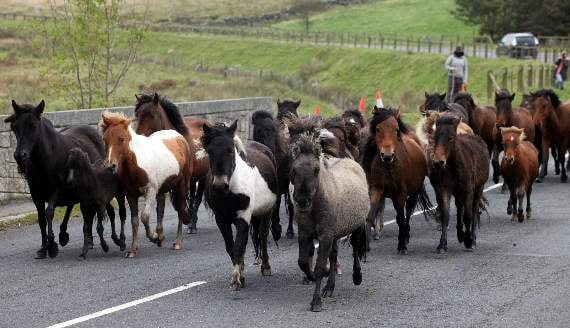
THE DARK days of Dartmoor ponies left unwanted and unsold after drift sales could be a thing of the past, the auctioneers behind next Thursday’s drift sale have suggested.
As preparations are made for the sale of moorland foals at Chagford on Thursday, organisers Rendells are reporting an increase in entries and buyers interested in training them as riding ponies.
‘I think we have turned a corner, it is not fantastic, but we have got away from “four ponies for a pound” and they are beginning to be ridden again, people are seeing their value,’ said Rendells partner Peter Farnsworth.
‘We had much better prices last year and they are going to be up this year. We have got 225 entered. There will be a mixture of foals and mares, a bit of everything really, from all over the moor.’

‘We have got a good level of enquiries, with people ringing up interested in keeping them as riding ponies. I think the general economy in the country has picked up a bit, so there is a bit more money to keep horses. Other sales in the New Forest have been better this year.’
Last year, ponies sold for nearly £60 on average at the Chagford sale, six times the reserve price of ten guineas, around £11. There were 118 ponies entered, and 94 sold.
Previous years have seen ponies sell for the miserly sum of ten guineas or not at all, leaving owners facing having to shoot their own stock.
The better prices — and good condition of foals shown by those brought off the moor on Monday at Merrivale — suggest that moves to limit indiscriminate breeding of foals on the moor could be working. These include a trial of a contraceptive for mares, and farmers taking stallions off the moor to breed selectively with mares on their own land.
Harry Broadbent, also of Rendells, said: ‘Last year, 80 per cent of the ponies sold, which was the highest percentage for some time. In 2015, 65 per cent sold while in 2014 it was just 55 per cent. The average price the ponies fetched last year was £59.68 each, which is three times higher than it was in 2014. There were less entries and they were generally of better quality.
‘It makes it a more worthwhile proposition for the farmers if they are fetching better prices.’
Farmers on the moor have commoners’ rights to graze their animals across the moor, with ponies playing an important part in keeping scrub down. However, without a market for the ponies, the farmers cannot afford to keep them.
Dartmoor pony farmer Mary Alford, who brought her own herd off the moor in the Merrivale drift on Monday, said: ‘We have had several enquiries about buying our ponies and in general there are more enquiries. There aren’t as many ponies as there used to be, numbers have declined drastically, but the quality is good.
‘There will always be one or two ponies that don’t sell, but that is the same with everything, with cattle, sheep and ponies, the best will always sell.
‘The hill ponies have gone on to do great things in the show ring, the driving classes and the children’s classes, so they are recognised as the ponies to ride and drive. The name is out there and they are recognised and valued a bit more because they have been successful.’
Tom Greaves, from The Dartmoor Society, said news of the better prices was ‘very encouraging’.
Comments
This article has no comments yet. Be the first to leave a comment.