
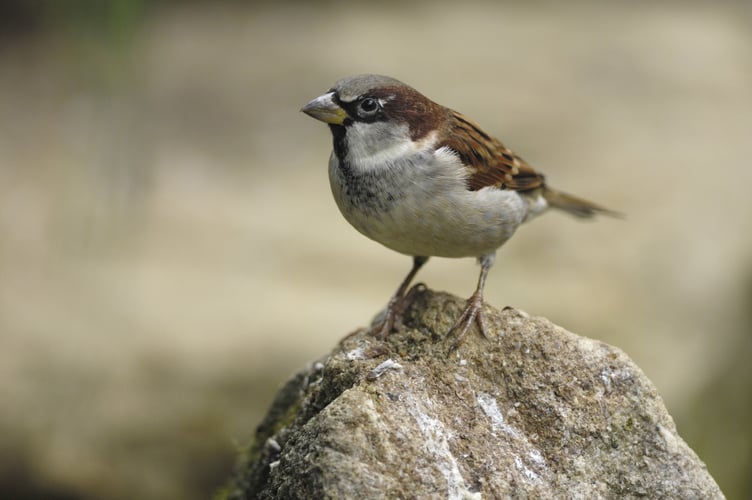
The humble sparrow has once again topped the charts in Devon for the RSPB’s annual Big Garden Birdwatch.
Nationally more than 650,000 people took part in January’s snapshot of how garden birds are faring, counting more than nine million birds of over 80 species during the count.
In Devon nearly 16,400 people took part in the count which saw the little sparrow holding onto the top spot and the blue tit remaining at number two, with the starling creeping up one place to number three. The wood pigeon and blackbird took fourth and fifth place respectively.
However, it is further down the garden rankings where a more importat story lies. At 18th spot on the list is Greenfinch, which has seen a 67% decline in average numbers recorded since Big Garden Birdwatch began in 1979.
Other UK-wide surveys show that Greenfinches have dropped by over 65% since the latest UK wide surveys began in the mid‑1990s, equating to the loss of over two million birds.
The cause of these losses is disease, especially a disease called trichomonosis, which spreads more easily when birds gather around feeders—particularly in summer and autumn. As a result of these declines, Greenfinches are now on the UK Red List due to disease-related declines.
With the help of other experts, RSPB scientists have taken a fresh look at what happens when we feed garden birds. It turns out the picture is quite mixed: there are clear benefits, but also some risks, and plenty we still don’t fully understand.
The RSPB’s chief executive, Beccy Speight said “Feeding birds is something millions of us love and value, but the science shows us that birds such as Greenfinches have been affected by the spread of disease at feeders.
“Despite the risks, feeding garden birds remains hugely beneficial when done safely and at appropriate times of year so we’re asking the public to adopt simple seasonal changes that will help protect bird health in the long term with the message Feed safely, Feed seasonally.
“It’s important to adjust what we feed our garden birds during the summer and autumn months when there’s a higher risk of disease spreading. From May 1 to October 31 people should pause filling their bird feeders with seed and peanuts to prevent too many birds gathering in one place. It’s okay to keep offering small amounts of mealworms, fat balls, or suet year-round. “



Other recommendations from the RSPB include cleaning and moving bird feeders weekly to prevent a build up of potentially contaminated debris and changing water daily.
It also recommends retiring flat-surfaced feeders as research has confirmed that there’s a higher risk of the disease spreading on them so it’s where contaminated food can collect for other birds to eat. This means bidding a fond farewell to feeders that have any flat surfaces – including bird tables.
Beccy Speight contined “We’re not asking people to stop feeding, just to feed in a way that protects birds’ long-term health. By making small changes together, we can ensure garden feeding continues to be a positive force for nature.”
Comments
We've recently changed our login process. If you have an account for commenting, you will need to re-register on the login window.
This article has no comments yet. Be the first to leave a comment.