
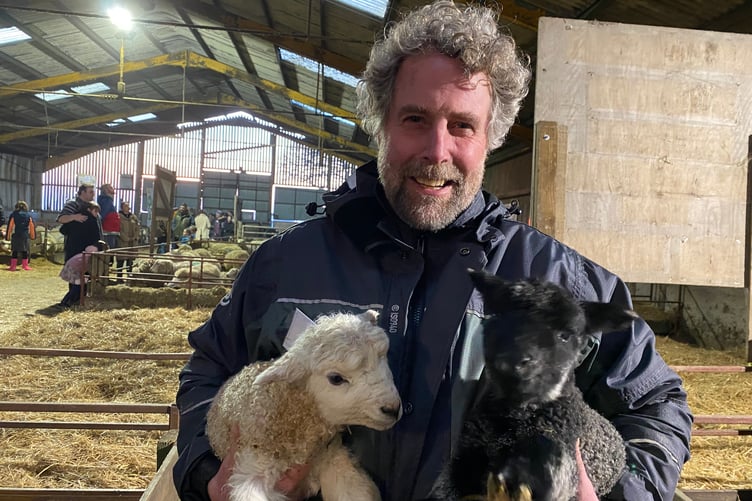
A change to agri-environment grants which could lead to a drastic reduction in the number of hill ponies on Dartmoor has been criticised by local farmers.
Farmers say they could have to cull ponies to comply with reductions in livestock numbers allowed to overwinter on the commons being brought in by government body Natural England in a bid to improve the environmental health of the commons.
The Dartmoor commoners, local farmers with historic legal rights to graze privately-owned moorland, face a reduction of up to 75 per cent in the numbers of livestock they can graze on the commons, to qualify for grants under new agri-environment agreements.
These are currently being negotiated between individual farmers and Natural England, with the first due to be introduced at the end of the year.
The Dartmoor Hill Pony Association, a charity campaigning to protect the breed, is petitioning Natural England to remove the pony from the livestock/stock grazing quotas, to avoid farmers culling ponies if they are forced to choose between ponies and cattle.
Meanwhile, farmers say the pony issue has highlighted wider problems with the newly introduced Environmental Land Management Scheme (ELMS) which sees Defra (the Department of Environment, Farming & Rural Affairs) pay farmers to manage land to benefit the environment.
The ELMS replaces the previous scheme, called Higher Level Stewardship (HLS).
Mat Cole, Yelverton livestock farmer and NFU South West upland farming spokesman, said: “The ponies issue have just highlighted a bigger issue with Defra’s new ELMS. The ELMS replaced the previous scheme, HLS.
“In order to get into an agreement on moorlands and commons like Dartmoor, the stocking level has to be at a prescribed level. That level is half what it was in HLS, which was the last incarnation of agreements.
“So basically, if commoners or farmers want to access and generate the income from our moorlands they have to remove half of their stock. That is not palatable to most commoners as this will devastate their herds and flocks of sheep, cattle and ponies.
.jpeg?width=209&height=140&crop=209:145,smart&quality=75)
“It seems like there is a stark choice, take the ELM’s money and stop farming the common or keep farming the common, but you are on your own. This is not a good place to find yourself as a farmer, as Dartmoor is under-grazed.”
He said farmers have one set of prescribed stocking rates for all the moorlands. So, this results in all the uplands, from Bodmin to Northumberland, have one rate even though they are very different places: “We have warmer winters and longer growing seasons down here, but in the eye of the scheme that doesn't matter.
“We have increased growth of woody vegetation on Dartmoor creating an accumulated wild fire risk and we have farmers who are desperately worried about the future of their businesses. If this persists Dartmoor will be a poorer place ecologically and economically.
“This has been coming for a while, but the ponies receive air time, much more than sheep and cows. But the issue is real, and the fault lies with an uplands ELMS offer which will deliver nothing but disappointment for everyone.”
Mat said: “Schemes should support sustainable farming in the uplands with a balance of farming and food production with environment delivery for nature, water, access, clean air and all the other natural capital we enjoy on Dartmoor.”
Comments
We've recently changed our login process. If you have an account for commenting, you will need to re-register on the login window.
This article has no comments yet. Be the first to leave a comment.