
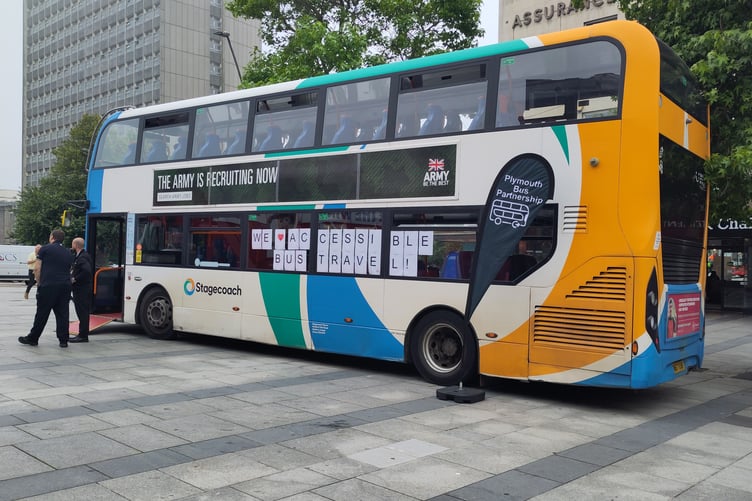

On a sunny Friday afternoon in early June, top deck passengers on a bus from Plymouth to Yelverton were surprised by leafy branches brushing the windows. The bus, and all other vehicles, had been diverted off the A386. Enjoyment of unexpected rural views was blighted by unspoken realisation of the likely cause – another crash on what a subsequent headline in this paper called a ‘Dartmoor danger road’.
Transition Tavistock welcomes the news that Vision Zero South West is planning safety measures for the A386 between Yelverton and Woolwell, including a reduced speed limit. It’s a vital link for travel between Tavistock and Plymouth, which we think would be safer if people had more choice of ways to make that journey. How about building the long discussed commutable cycle route parallel to the road?




Easier bus travel would also reduce traffic levels. Who plans bus routes and decides how often services run? According to the government’s ‘integrated transport strategy’: “Buses are a public service and must be developed in partnership around the needs of the communities they serve, with local leaders and residents playing a central role in ensuring that the bus networks meet people’s needs.”
In practice, it’s messy, involving both bus companies and councils, according to whether a particular route is profitable or requires subsidy. Even messier for routes, like Yelverton to Plymouth, that cross local government boundaries. Whoever decides, before making a bus service more frequent or starting a new one, they want assurance that ‘enough’ people will use it. But how do they know which of us might switch a trip to a sufficiently convenient bus?
Nationally, 70 per cent of people not currently using public transport say they could be encouraged to, with improved connections, cost, frequency and reliability of services the most important factors. Who’s asking what that means at local level – where people make daily decisions on how to get around? At least Plymouth Bus Partnership used a Better Transport Week city centre display to promote buses.
Transition Tavistock’s Travel Action Group is starting some local research to fill a particular gap. We’re spurred by stories people have told us of journey plans disrupted by Stagecoach’s decision last September to stop bus #1 passing Plymouth railway station. Is this just an inconvenience for an unfortunate few, with most travellers happy with alternatives? Or is there a wider demand for joined up public transport in this area?
Whether or not you use trains, we’d be interested in your views. Do you see benefits in other people travelling by bus and rail, even if that’s not for you? Head to www.transitiontavistock.org.uk/buses to take our online survey.
While we may leave the survey running over the summer, we’ll include an initial look at responses in our next Travel Action Group meeting, scheduled for Thursday, July 9 at 10:30am in Tavistock Library. See www.transitiontavistock.org.uk/events for details. Booking’s not essential but helps avoid the scramble to set out more chairs we had last time. Good problem!
Comments
This article has no comments yet. Be the first to leave a comment.