
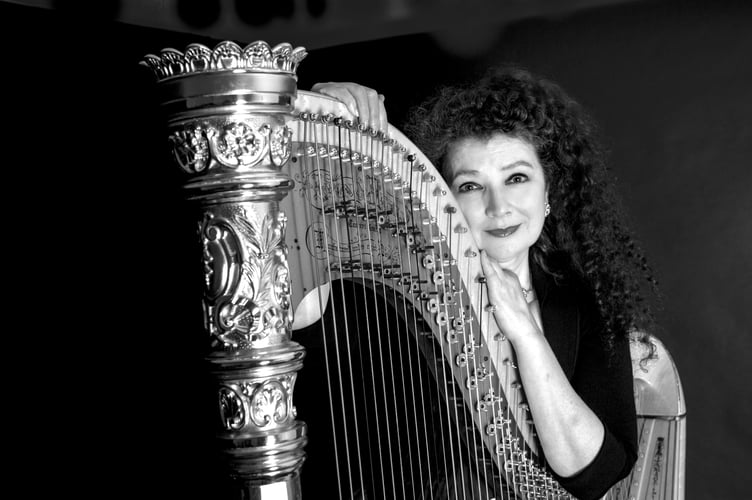
An acclaimed harpist who accompanies silent films has told of her unusual career ahead of a rare public showing on the silver screen.
Chagford resident Elizabeth-Jane Baldry specialises in silent film scores and has played internationally.
Her now largely extinct job is to play music which does the job of a spoken script and of any other sounds on a soundtrack, as well as that of any film musical score – to set the tone, mood (such as suspense, action and comedy) and atmosphere for particular genres.
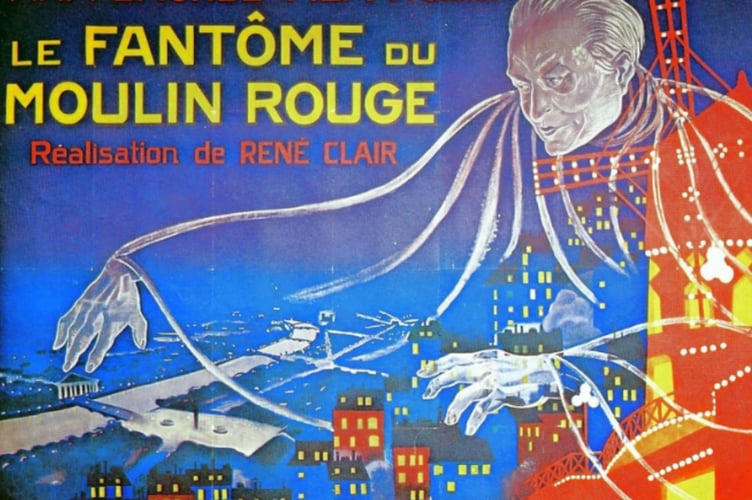
Elizabeth-Jane will be playing her harp with colleague multi-instrumentalist Stephen Horne (piano, accordion, and flute) at a screening of the 100-year-old French film the Phantom of the Moulin Rouge on Friday, April 24 at 7.30pm in Chagford’s Jubilee Hall. More information from Sally’s Newsagents, Chagford.
-will-be-accompanie.jpeg?width=209&height=140&crop=209:145,smart&quality=75)



‘Fantôme of the Moulin Rouge’, directed by French filmmaker René Clair, is a surreal tale set in Paris, blending comedy, fantasy and early cinematic trickery.
Elizabeth-Jane said: “It's been quite a ride over the last 20 years. I've created music for films at film festivals all over Europe, especially with my brilliant colleague, the multi-instrumentalist Stephen Horne.
“As a solo silent film musician, I've played for some incredible films dating as far back as 1895, some charming Edwardian films, and classic cinematic masterpieces like Nosferatu, Cottage on Dartmoor, Phantom of the Opera and the glorious 1925 Peter Pan.
“Stephen and I have created music for classic films as well as exotic rarities which rarely leave the film archives.”
She says creating music for silent film is ‘fascinating’ and presents distinctive challenges for a musician: “This is because the score must carry functions that spoken dialogue and natural sound normally provide. Silent film musicians are a particular breed.
“We need to have a particular sensitivity to emotional nuance, tremendous physical stamina and a penchant for living dangerously - sometimes we even have to create music live at screenings of films we’ve never even seen before.”
Silent film music is not just about simply ‘adding background music’: “The music also needs to supply the film’s emotional language, pacing, and narrative cohesion because of the lack of recorded dialogue, ambient sound and sound effects.
“We have to communicate what audiences today might expect from multiple sound layers.”
Different musicians adopt different approaches: “I personally prefer to honour the hard work of the original long-dead filmmakers, who achieved astonishing technical brilliance with the limited film technology available.”
Elizabeth-Jane always composes original themes, interpreting the film sincerely and supporting the predicaments of the characters as honestly as she can.
Other musicians might use original 1920s music, modern electronic music or even play their own stuff without reference to what’s happening on screen – like a live gig with an old film playing in the background, said Elizabeth-Jane.
She added: “For me, the best compliment is if someone says afterwards that they became so immersed in the drama that they forgot I was even playing. That’s when I know that the music has done what it’s supposed to do, bring an old film to life for 21st-century audiences.”
-will-be-accompanie.jpeg?width=752&height=500&crop=752:500)
Comments
This article has no comments yet. Be the first to leave a comment.