
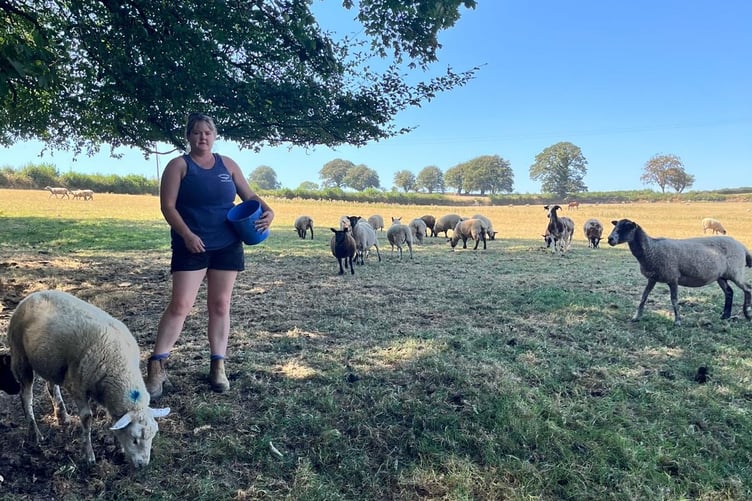
A local farmer herself affected by bluetongue is raising awareness of the financial and emotional strain the disease is putting on farmers.
Mary Ayland, who farms near Brentor, has spoken out to inform the wider public of the far-reaching consequences of the outbreak is putting on farmers’ livelihoods and mental health.
“For many farming families, this is about far more than animal health. It brings financial pressure, uncertainty, difficult decisions around vaccination and livestock movements, and a significant impact on mental wellbeing,” she said.
“Personally, this is an incredibly difficult time. Every day, many farmers are waking up with the fear of whether they are going to walk into the fields and find one of their animals dead. That uncertainty is emotionally exhausting. The stress doesn't stop when the working day ends—it follows you home, keeps you awake at night and affects entire families.”
Bluetongue not only kills but it can prevent sheep and cattle, the animals affected by the disease, getting in lamb or calf. For pregnant ewes or heifers which contract the disease, it can affect the growing foetus, leading to calves or lambs being born mummified or deformed.
As a result, some farmers have chosen not to breed from their livestock this year. This could lead to a shortage of beef and lamb in the supermarkets.
There is an emotional toll on farmers as they come to know the individual animals and their characters well, so feel distress if an animal dies.
A vaccine is available but there is a waiting list and UK’s vaccine supply has currently run out.
There is, added Mary, a further complication – if the vaccine is given to an animal already affected, it will kill them.
Yet, one of the key messages Mary wants to get out is to let struggling farmers know they are not alone and help is available, especially from charity the Farming Community Network, which offers farmers practical tips, financial and mental support and works with other charities to coordinate support.


Stephen Dennis from the Farming Community Network said: “There are very few people that would be unaffected by it. It's mainly in sheep. The effects are certainly fatalities. The cattle aren't quite so [bad]... it's really the sheep sector it's hitting very hard. I've had conversations with people that have lost like 30 per cent of the flock. It's quite dramatic, really.
“It's probably exaggerated by the fact that there's very little grass, and livestock are probably leaner than what they normally would be. So that ability to recover is not quite so easy."
Bluetongue is transmitted by mosquitoes and has been particularly virulent this year due to the hot weather. This has caused water to stagnate attracting the insects. Sheep often drink from these pools and catch the disease.
Anyone in need of help can visit the Farming Community Network website at https://fcn.org.uk/ or call the helpline on 0300 111 999.
Comments
We've recently changed our login process. If you have an account for commenting, you will need to re-register on the login window.
This article has no comments yet. Be the first to leave a comment.