
THERE are not too many Mongolian speakers in Okehampton so to overcome this language barrier the town's college found a useful way to help one of its latest pupils.
Munk-Orgil Elkins, 16, from Mongolia in Asia has recently started in year 11 at Okehampton College, but speaks little English.
For teaching assistant Tracey Smith, who teaches English as an additional language, it was important to find a way to communicate with Orgil to help him progress with his English and education.
The college organised a video link with a Mongolian speaker from the University of Exeter, so that Orgil could express himself in his native tongue.
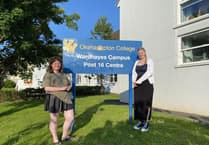



The video link was the first time this type of assessment had been used in a Devon school.
Tracey told the Times: 'By conducting an interview in the pupil's own language we can assess what Orgil's needs are, what subjects he studied, what he likes to do, hobbies, family etc.'
'Orgil has settled in really well at Okehampton and it was good to hear him speak fluently and comprehensively in his own language about how he feels about the college and his hopes for the future.
'He is making friends and always seems happy but the link gave us an idea of what he has done before and what he enjoys.
'He's a very bright boy, articulate and is determined to improve his English and go on to the sixth form.'
The video conference suite is a new addition to the college and after the success of his week's meeting it is hoped that it will be used regularly in all areas of the curriculum.
Early links to a school in African were also deemed a success.
With Orgil at the video conferencing was his mother Monguntaya, who has been in the country longer than Orgil and has learnt a little more English.
Daryll Chapman, the college principal, said: 'I am very pleased and proud that Okehampton College is the first school in Devon to use the video conference link for pupils with English as an additional language.'
Mr Chapman also thought it was an 'excellent' tool to enable the community to link with other speakers of their own language.
'It is good to know that we can support not just the pupil but the family as well,' he added.