
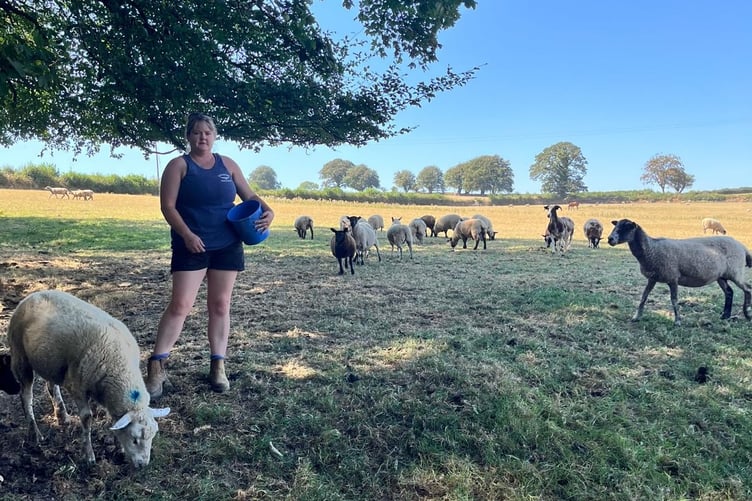
A Brentor farmer has said she welcomes the news that Devon County Council is offering support to farmers affected by bluetongue but that more could be done.
Mary Ayland described the council’s decision to introduce flexible rent payments and campaign to improve rural broadband services as “something great” but questioned whether it went far enough.
Earlier this month, the county council’s Cabinet resolved to introduce a range of measures to help. These include flexible rent payments for affected tenants on council-owned land and a request to Government for greater investment in rural broadband services.
The council said: “Reliable broadband is becoming increasingly important for farmers to run their businesses, meet regulatory and reporting requirements, manage disease outbreaks and access funding.”
Councillors will also lobby local MPs to ensure the lessons learnt from the bluetongue outbreak are reflected in future Government farming policies.
In October, the council agreed to reinstate the Rural Support and Wellbeing Programme for three years which would provide farming families with practical advice, wellbeing support and early intervention services.
But Mary believes these measures have limitations and may not provide farmers with the long-term support they need as the effects of the disease are likely to be felt for several years.
She said: “I don’t want to take away from the fact that the council are doing something great but, for instance, the flexibility in rent payments is only for council tenants. I rent privately. The Wellbeing Programme is great but it only works out at £60,000 a year across the county which is not going to go far. I would also like to know how the council will contact farmers in very isolated places who may not be able to access the internet easily.”
Mary added that this coming spring was likely to be “very trying” due to the ongoing mental and financial effects of the loss of livestock.
Loss of fertility is a known side effect of bluetongue meaning there is the potential for fewer lambs and calves next year.


To help identify infertile animals, the Dartmoor Hill Farm Project organised two free ram fertility testing days in October at the Tavistock Livestock Market and Exeter Livestock Centre.
Five of Mary’s rams were tested and found to be infertile which has forced her to hire fertile rams for breeding. This has cost her up to three times the usual rate for a stud fee.
She is also worried that bluetongue may have affected ewes’ fertility and has raised the possibility that fewer ewes will fall pregnant or give birth to deformed or stillborn lambs instead.
“We might usually have 200 lambs born,” she said. “This year we might only have 100 healthy lambs and we might see less meat in the supermarkets. It might not go well and it will have a huge impact on families and their livelihood.”
Comments
We've recently changed our login process. If you have an account for commenting, you will need to re-register on the login window.
This article has no comments yet. Be the first to leave a comment.