
Many local people are fascinated by the potential of healing plants and it’s good to know what native herbs and flowers are growing nearby, along with their historical healing properties.
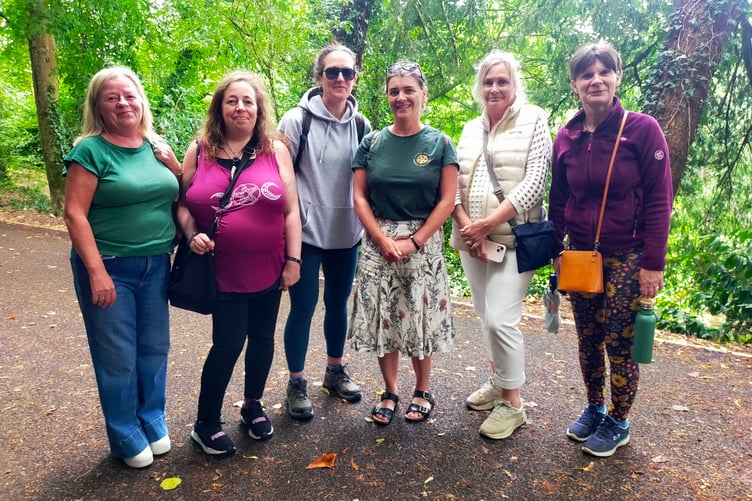
A recent guided walk in The Meadows in Tavistock, led by a medical herbalist, revealed the power of several plants growing in the wild.
Nine participants joined the walk, keen to discover what plants were growing on the grassy areas and beside the river, along with what “healing properties” they possess.
Leading the walk with this information was Zarah Hannaford, a medical herbalist and aromatherapist, she’s a member of the National Institute of Medical Herbalists (NIMH) and she’s completed a Betonica School of Herbal Medicine diploma (a four-year course).
The nine women who joined the walk all shared a love a plants, herbal medicine, gardening, nature and exploring the local environment — and despite the parched ground after the hot, dry weather, numerous medicinal plants were discovered during an hour-long stroll.
“Anything growing now is tough”, Zarah said, showing the group a humble-looking “pineapple weed”, also known as wild camomile.
Zarah made sure to warn the group to be careful when foraging, as many plants, including hemlock, which was spotted growing beside the river, are extremely poisonous.
However, stinging nettles, easily identified, are just one of the everyday wild plants that can be harvested locally — and they’re full of vitamins and minerals.
A “love of plants” and “interest in healing herbs” has been part of Zarah’s life since she was a child. These days she carries out holistic consultations with clients, to “make sure certain herbs are right for them”.
Zarah said: “Medical herbalists make a prescription specifically for that person, but it has to be safe — and that’s why the training takes years. Tinctures are popular and I encourage people to try herbal teas. I like to look at what’s in the hedges, watching and observing through the seasons, to see what’s growing outside.”



As the Discovering Herbs walk (on August 5) continued, Zarah pointed out some flowering St John’s wort, an “antidepressant with incredible benefits” that should be “used with caution”.
Hemp-agrimony, a lilac-coloured flower also known as 'raspberries and cream', was also spotted in the Meadows — and this plant is known for its fever reducing properties.
Broad leaf plantain is an “incredible plant to help ease nettle stings, insect bites or bramble cuts”, Zarah explained, and it also “works well for digestion and lung issues”.
Another common plant that grows across the region is yarrow, which “also helps with infections and digestive problems”, Zarah said.
“Every plant has its reason”, Zarah added, as the Discovering Herbs walk continued its loop around the park. Elderberries were pointed out to the group along with a lesser-known plant, pellitory-of the-wall.
Every Thursday, Tavy Herbal Health, Zarah’s business, trades at Tavistock Pannier Market. On these days clients can purchase “safer, usable herbs”, however if someone has more complex health issues, they need to book a consultation.
Another Discovering Herbs walk will take place in autumn (Monday, October 5) when different things will be growing, due to the seasonal shift.
Comments
This article has no comments yet. Be the first to leave a comment.