
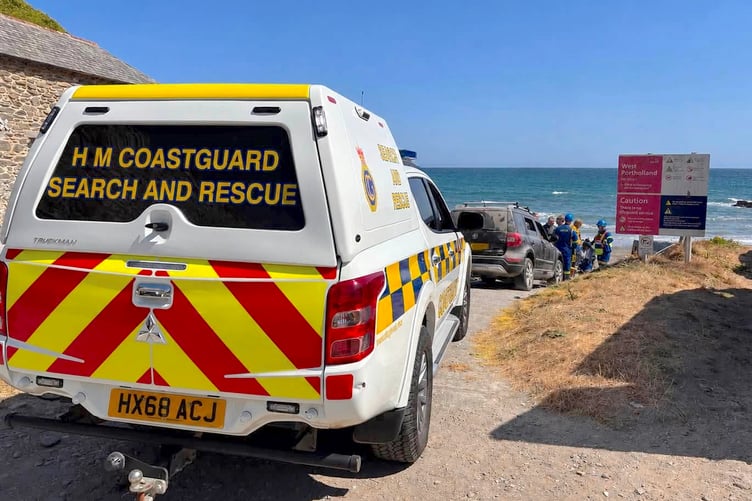
Volunteer coastguards have finally secured a formal union voice in negotiations over their pay and working conditions after a months-long campaign by GMB, following earlier resistance to its calls for recognition.
The Maritime and Coastguard Agency (MCA) has signed an agreement allowing GMB to represent around 3,000 Coastguard Rescue Officers (CROs), who respond to emergencies and search for missing people around the UK coastline.
The deal follows a change of heart by the agency, which had previously turned down calls by GMB for recognition, prompting the trade union organisation to begin proceedings with the Central Arbitration Committee (CAC).
On October 1, MCA confirmed it was ready to begin discussions over a voluntary recognition agreement for coastguards.
The agency has since said it did not change its position, explaining that its existing union, the Public and Commercial Services (PCS) union, advised in October that it no longer considered itself the appropriate representative for CROs.
Following discussions between the MCA, GMB and the Department for Transport (DfT), it was published on October 27 that a recognition agreement could be put in place.
This agreement marks a significant step for officers whose employment status and payments have been the subject of recent legal and political disputes.
In July, the government abandoned plans to replace payments for training and emergency callouts with an expenses-only system, following weeks of campaigning by coastguards, unions and MPs.
The proposed changes had raised concerns about recruitment, retention and the future resilience of the service, with officers warning that losing payments could make it harder to balance coastguard duties with jobs and family commitments.
The existing arrangements were retained, but the dispute highlighted how formal union recognition gives coastguards a collective voice in decisions surrounding workers' rights, rather than raising concerns individually.




GMB also secured a landmark ruling in 2024 establishing that Coastguard Rescue Officers could qualify as workers rather than volunteers, strengthening the union’s efforts to secure formal representation.
Nicola Savage, GMB national officer, said the latest agreement would give officers a voice in decisions affecting their working lives.
“This is a historic deal; for the first time our life-saving Coastguard Rescue Officers (CROs) will have a genuine voice to fight their corner,” Savage said.
“It just goes to show what workers can accomplish when they stick together.”
Virginia McVea, chief executive of the MCA, said the new agreement reflected a shared commitment to “constructive engagement and meaningful dialogue”.
She added that the agency valued the role of trade unions in representing and supporting officers in their work to save lives, assist people in distress and protect coastal communities.
The MCA said the agreement establishes a framework for consultation and engagement on matters affecting CROs, but stated that it does not determine the future operating model of the Coastguard Rescue Service.
The agreement formalises GMB’s role in representing coastguards as discussions continue over the service and the conditions under which officers carry out their work.
Comments
We've recently changed our login process. If you have an account for commenting, you will need to re-register on the login window.
This article has no comments yet. Be the first to leave a comment.