
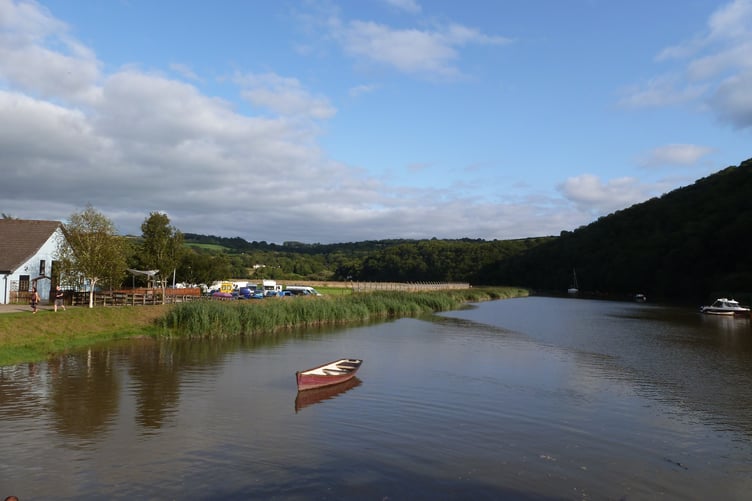
The River Tamar has shaped the communities, landscapes and wildlife of Devon and Cornwall for generations, but what will the river look like to generations yet to come?
Our rivers already face immense pressures from sewage, agricultural runoff, abstraction, development and habitat loss. Climate change is intensifying these pressures. Longer droughts and low flows, punctuated by violent rainfall, will place new demands on infrastructure never designed for today's climate. This last record-breaking summer offered a glimpse of that future.
Rising temperatures, more frequent floods, worsening water quality and cumulative habitat loss could push the Tamar towards thresholds from which recovery becomes far harder.
Questions also remain about how effectively existing systems protect rivers. Recent analysis by Friends of the Earth placed South West Water at the bottom of England's water companies for environmental performance.
South West Water points to significant investment and recent reductions in spills, but this is about something larger than one company. Are our systems of governance and protection adequate for the challenges we now face?
That is why Drip Drip is working towards a Charter for the River Tamar, as part of the growing Rights of Rivers movement. Around the world, countries have recognised rivers as legal entities, reflecting Indigenous traditions in which rivers are understood as part of a living community.
Working with the Environmental Law Foundation and Simmons & Simmons, Drip Drip aims to develop a legally robust charter that does not depend upon new legislation, but can make sure the river is meaningfully represented in decisions affecting its future.
At its heart is a simple principle: the Tamar should have a voice. When decisions are made about pollution, abstraction, development or habitat, the health of the river should be represented alongside human and commercial interests.
There is another voice easily absent from today's decisions: that of future generations. Someone living beside the Tamar in 2075 cannot speak at a planning meeting today. Wildlife that may depend upon its waters decades from now cannot submit evidence to a consultation. By then, today's choices may have locked in damage that cannot easily be reversed.
A Charter asks us to take their interests seriously now – before the river's capacity to recover has been lost.




On Thursday, September 10 in conjunction with Drip Drip, Calstock Arts presents the film ‘Jo in the Water’. The film follows Jo Bateman, a passionate sea swimmer turned reluctant activist, taking on one of the UK’s biggest water companies. This feature-length documentary is about connection—to nature, to our own sense of place, and to our responsibility for the world around us.
Ticket income from this film will be donated to Drip Drip.
Comments
We've recently changed our login process. If you have an account for commenting, you will need to re-register on the login window.
This article has no comments yet. Be the first to leave a comment.