
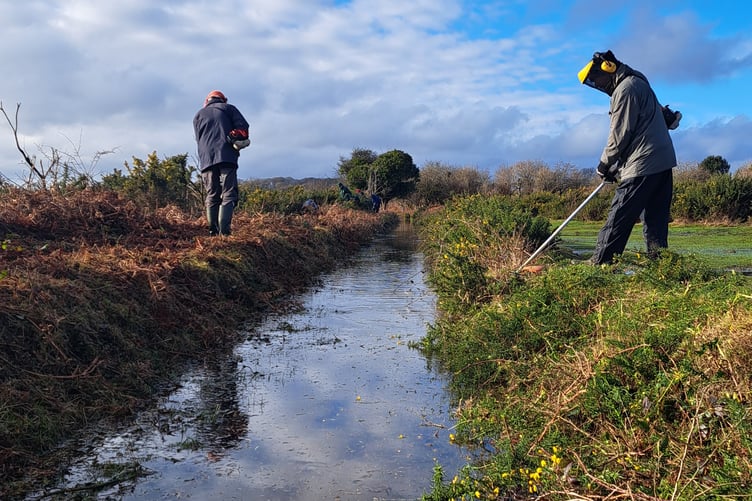
Communities in and around Dartmoor are being offered the chance to find out where the water from their tap comes from at events this summer.
The moor’s varied landscape and habitats all flow with water, from peat bogs and mires to the deep river valleys.
The new community project ‘Our Land Flows: Peat to Pipe’ focuses on the history and heritage of the leats that were constructed hundreds of years ago to transport water to power the area’s working mills and mines, and for drinking in the towns and cities nearby.
Residents are invited this August, September and October to explore more about how the water from the peatlands of the high moors becomes piped tap water at ‘Our Land Flows: Peat to Pipe’ events.
The Art and Energy Collective, which uses community art and science to stimulate imagination, nature recovery and climate resilience, has been awarded funding from Dartmoor’s Farming in Protected Landscapes (FIPL), a project supporting farmers carry out nature recover, to offer these activities.
Cat Andrews, art and energy collective director and producer, said: “All our Peat to Pipe events will celebrate the role of water in our cultural heritage, our habitats and in resilience to climate change. Everyone can learn from each other as they get know about how our land flows and have fun along the way.”
The Dartmoor Preservation Association (DPA) has also given a grant, to encourage more people to help conserve Dartmoor landscape heritage.
Helen Bruce, of DPA, said: “We’re delighted to work with the art and energy collective who will raise awareness of the importance of water on Dartmoor in natural and manmade structures through which it flows.
“Dartmoor National Park supports farming for the long-term benefit of the landscape through which our water flows. Everybody is reliant on this water cycle and the role it plays in the landscape, from drinking water, to reducing flood risk and enhancing our health and wellbeing.”
Kaitlin Perryman, Dartmoor National Park FIPL advisor, said: “During the ‘Our Land Flows’ events we will hear from the farming community how they manage water on the moors. The drinking water for many towns and communities below Dartmoor starts on the high moorland, in the rivers.

“Dartmoor farmers and land managers work hard to support these habitats to flourish so they can store and collect precious water we need to thrive. This FIPL project highlights this essential process and the work of farmers supporting communities on and below the moor.”
Jenny Ayrton, Art and Energy Collective director, said: “We are fascinated with peatlands on the moor top. So, we’d love to hear more from anyone who knows about the history and archaeology of the leats.”
Anyone who knows about the history of water flow off the moor or are interested in this project, contact: [email protected]
‘Our Land Flows: Peat to Pipe’ will share and celebrate the role of water in nature for both urban, rural and farming communities, speaking to its impact on health, habitats, and cultural heritage.
Further details of events can be found at www.artandenergy.org
Comments
We've recently changed our login process. If you have an account for commenting, you will need to re-register on the login window.
This article has no comments yet. Be the first to leave a comment.