
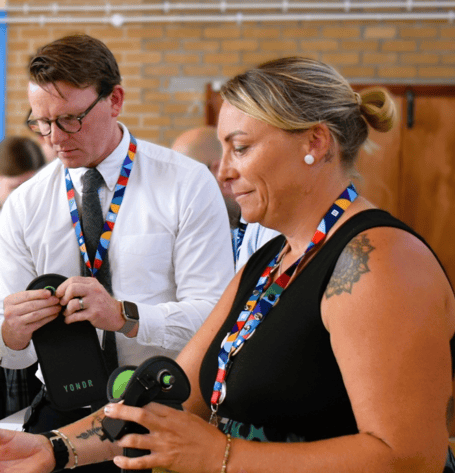
Pupils at several West Devon schools have welcomed a new policy banning the use of mobile phones during the school day, which came into force before they broke up for the summer holidays.
There has been concern from teachers nationwide that phones disrupt lessons as pupils use them to text, take photos and log onto social media during lessons.
Dartmoor Multi Academy Trust (DMAT) introduced a new mobile phone pouch policy across its secondary schools this month (July), which is designed to create a more focused, engaging and positive learning environment for students.
The schools include Okehampton College, Tavistock College and The Promise School, Okehampton. The schools have also thanked parents, whose support has enabled the move to be a success so far.
Working in partnership with pouch providers Yondr, the trust is providing students with secure, lockable pouches to store their phones during the school day, helping young people to fully engage with lessons, strengthen relationships with their peers and make the most of their time in school.
The pouches enable students to keep their phones, but cannot access them during the school day. It also means teachers no longer have to police restricted phone use at school and pupils get a six to seven hour break from digital screen distractions.
Under the new system, students now keep their phones securely stored in a locked pouch throughout the school day before unlocking them at designated stations when they leave school. This ensures they remain digitally connected before and after school, while enjoying a distraction-free learning experience during the school day.
The initiative reflects DMAT’s commitment to supporting students to thrive both academically and socially in an increasingly digital world.
Research by Yondr, which has supplied schools with pouches in 48 countries, shows schools implementing phone-free environments have reported improved student wellbeing, increased classroom engagement with teachers and each other, more social interaction between students elsewhere at school, less cyber bullying and reduced behavioural referrals.
By reducing the impact of mobile phone distractions, DMAT aims to create more opportunities for meaningful face-to-face interaction both between teacher and students and between students themselves, deeper concentration in lessons and a stronger sense of community across its schools.




The trust believes the policy will help students develop healthy digital habits while supporting staff to deliver the highest quality educational experience possible.
Rachel Shaw, chief executive officer of the Dartmoor Multi Academy Trust said: "As educators, we have a responsibility to respond to the challenges young people face both online and offline. This initiative is about supporting wellbeing, improving engagement and helping students get the very best from their education.
“By introducing the Yondr programme, we are creating more space for focused learning, meaningful conversations and positive social experiences, while still ensuring students have access to their phones before and after the school day.
"Students have already embraced the new system and we are very grateful to them and their families for supporting this initiative.”
“We are proud to be investing in a solution that puts learning, personal development and student success at the heart of the school day.
Comments
This article has no comments yet. Be the first to leave a comment.